
Introduction
Modern businesses depend heavily on reliable digital infrastructure to keep applications, websites, cloud platforms, databases, and communication systems running smoothly. As organizations handle increasing amounts of data and network traffic, having dependable hosting infrastructure becomes increasingly important. Cisco hosting can support these requirements by combining reliable networking technologies with secure and scalable IT infrastructure.
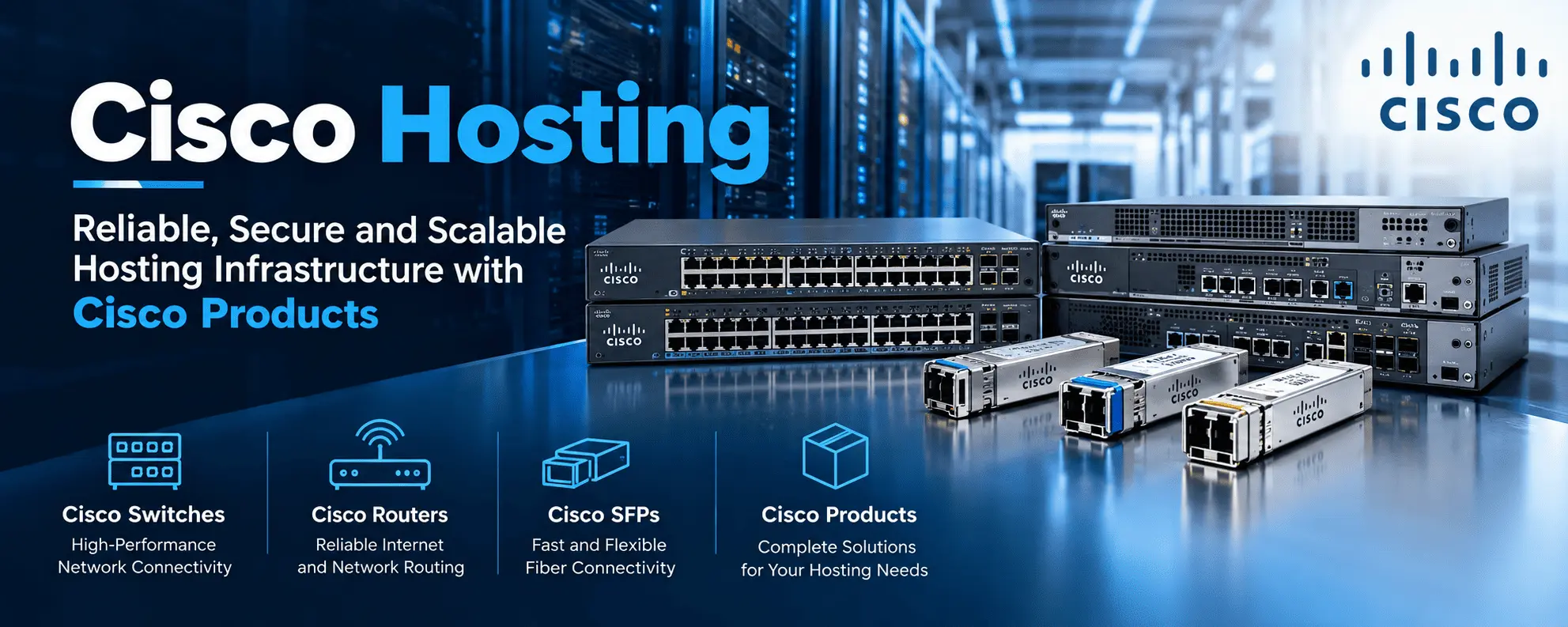
Cisco is one of the most recognized names in enterprise networking, offering a broad range of technologies designed to connect users, applications, servers, data centers, and cloud environments. From Cisco Switches and Cisco Routers to Cisco SFPs and other Cisco Products, businesses can build networking environments that are designed around performance, security, availability, and future growth.
Understanding the role of Cisco technologies in hosting environments can help organizations make better decisions when developing or upgrading their IT infrastructure.
What Is Cisco Hosting?
Cisco hosting generally describes a hosting or data center environment supported by Cisco networking infrastructure. It is not necessarily a single product or hosting service offered under one specific Cisco hosting package. Instead, the term can describe an infrastructure environment where Cisco networking technologies provide connectivity, routing, switching, security, and communication between different systems.
A hosting environment requires more than servers and storage. Servers need reliable connections to users, applications, databases, cloud platforms, and external networks. Networking infrastructure provides the foundation that allows these systems to communicate efficiently.
By incorporating suitable Cisco Products into the infrastructure, businesses can create networking environments that support demanding workloads while providing opportunities for scalability and improved network management.
Why Cisco Hosting Is Important for Modern Businesses
Reliable connectivity is essential for organizations that depend on digital systems. A network interruption can affect employees, customers, applications, online services, and business operations.
Cisco networking technologies are widely used in enterprise environments where network performance, security, reliability, and scalability are important. When appropriately selected and configured, Cisco infrastructure can help businesses establish a strong foundation for hosting and data center environments.
The right architecture can also provide better visibility into network activity. This can make it easier for IT teams to monitor traffic, identify performance issues, manage connected devices, and maintain reliable services.
Cisco Switches in Hosting Infrastructure
Cisco Switches are an important component of many enterprise hosting and data center environments. Switches connect servers, computers, storage systems, access points, and other network devices, allowing them to communicate within a network.
The appropriate switch depends on factors such as the number of connected devices, bandwidth requirements, port density, network architecture, redundancy requirements, and expected future growth.
In a hosting environment, switching performance is particularly important because large volumes of internal traffic may move between servers and other infrastructure components. Selecting suitable Cisco Switches can therefore contribute to efficient communication between different parts of the network.
Organizations should evaluate their existing infrastructure before purchasing new equipment. Compatibility, capacity, management capabilities, and long-term requirements should all be considered as part of the decision-making process.
Cisco Routers for Network Connectivity
While switches primarily connect devices within a network, routers are responsible for directing traffic between different networks. This makes Cisco Routers an important part of many hosting and enterprise infrastructure environments.
Cisco Routers can be used to establish connectivity between internal networks, branch offices, data centers, cloud environments, and external networks. The appropriate router depends on bandwidth requirements, network complexity, security requirements, connectivity options, and expected traffic levels.
A well-designed routing architecture can help organizations manage traffic efficiently and establish reliable connections between different network environments.
For businesses operating multiple locations or hybrid infrastructure, Cisco Routers can play an important role in connecting different parts of the overall technology environment.
The Role of Cisco SFPs in Hosting Networks
Network connectivity also depends on the appropriate transceiver technology. Cisco SFPs are used in compatible networking equipment to provide connectivity over different types of network media.
Small Form-factor Pluggable technology can support different connection requirements depending on the specific transceiver and network architecture. Fiber-based connectivity can be particularly useful for data center and enterprise environments where longer distances and high-speed communication are required.
When selecting Cisco SFPs, businesses should consider factors such as the required data rate, transmission distance, fiber type, connector type, and compatibility with the networking equipment.
Using the correct transceiver is important because an incompatible or incorrectly selected SFP can affect network connectivity and performance.
Cisco Products for Enterprise Hosting
The Cisco ecosystem includes a broad selection of networking and infrastructure technologies. Depending on their requirements, organizations can use different Cisco Products to create and expand enterprise networks.
Cisco infrastructure can be incorporated into data centers, office networks, hybrid cloud environments, branch networks, and other technology environments. The selection process should always begin with understanding the organization’s technical requirements rather than choosing hardware based solely on brand or specifications.
A professional IT infrastructure provider can help businesses assess their existing network, identify infrastructure gaps, and determine which Cisco Products are appropriate for their environment.
Cisco Hosting and Data Center Infrastructure
Data centers require carefully designed networking because they may contain large numbers of servers, storage platforms, applications, and connected systems.
Cisco networking technologies can be incorporated into data center architectures to provide connectivity between servers and other infrastructure components. Cisco Switches can facilitate communication within the data center, while Cisco Routers can connect different networks and external environments.
Cisco SFPs can also support suitable fiber or other network connections where compatible equipment requires transceiver modules.
The complete architecture should be designed around availability, performance, security, redundancy, and scalability. Businesses should also consider how the infrastructure will be maintained and upgraded over time.
Cisco Hosting and Network Security
Security is a critical consideration when developing a hosting environment. Businesses may store sensitive information on servers and applications, making network protection an important part of infrastructure planning.
Cisco technologies can be incorporated into network security architectures to help organizations control traffic, segment networks, manage access, and monitor infrastructure.
However, networking equipment alone does not provide complete security. A comprehensive security strategy should also include appropriate authentication, access controls, endpoint protection, software updates, monitoring, backup procedures, and security policies.
Network segmentation can be particularly useful because it allows organizations to separate systems and users according to their operational requirements.
Cisco Hosting for Hybrid Cloud Environments
Cloud computing has changed the way businesses design their IT infrastructure. Many organizations now operate hybrid environments that combine on-premises servers with cloud applications and services.
This creates additional connectivity requirements because users and applications may need to communicate across different environments.
Cisco Switches, Cisco Routers, Cisco SFPs, and other Cisco Products can form part of a network architecture designed to connect traditional infrastructure with cloud environments.
A well-designed hybrid network can help organizations maintain reliable connectivity while gradually adopting cloud services. It can also provide greater flexibility when workloads need to move between on-premises and cloud infrastructure.
Scalability and Cisco Hosting
Businesses rarely remain static. As organizations grow, they may add employees, applications, servers, offices, cloud services, and connected devices.
A scalable network architecture can make it easier to accommodate these changes. Cisco networking technologies are available across a wide range of deployment requirements, allowing organizations to select infrastructure based on their current and future needs.
Businesses should consider future expansion when selecting Cisco Switches and Cisco Routers. Choosing infrastructure with sufficient capacity can help reduce the need for major redesigns when network requirements increase.
Choosing the Right Cisco Hosting Infrastructure
Selecting the right infrastructure requires careful planning. Businesses should first understand their existing network architecture and identify the requirements of their applications and users.
Bandwidth, port requirements, network speed, security, redundancy, connectivity distance, data center architecture, and future expansion should all be considered.
For example, an organization requiring high-speed fiber connectivity may need appropriate Cisco SFPs alongside compatible switching equipment. A business connecting multiple locations may require suitable Cisco Routers, while a data center with numerous servers may need high-performance Cisco Switches.
The objective should be to create a balanced infrastructure where each component works effectively with the rest of the network.
Professional Support for Cisco Hosting
Implementing enterprise networking infrastructure requires more than purchasing hardware. Proper network design, configuration, installation, testing, monitoring, and maintenance are all important for achieving reliable results.
Businesses without sufficient internal networking expertise may benefit from working with an experienced IT hardware provider or system integrator.
A professional provider can help assess requirements, recommend appropriate Cisco Products, verify hardware compatibility, plan network architecture, and support deployment.
This approach can also help organizations avoid unnecessary hardware purchases and ensure that their infrastructure is aligned with their operational requirements.
The Future of Cisco Hosting
Enterprise infrastructure continues to evolve as businesses adopt cloud computing, artificial intelligence, automation, remote working, virtualization, and increasingly connected systems.
These technologies are increasing the importance of reliable networking because applications and users depend on fast and secure communication between different environments.
Cisco networking technologies can form part of this evolving infrastructure when they are selected and implemented according to specific business requirements. Combining appropriate Cisco Switches, Cisco Routers, Cisco SFPs, and other Cisco Products can help organizations develop networking environments capable of supporting modern workloads.
Conclusion
Cisco hosting can provide a strong foundation for organizations that require reliable connectivity, scalable infrastructure, and enterprise-level networking capabilities. By using appropriate Cisco Products, businesses can develop infrastructure suited to their specific requirements.
Cisco Switches can provide connectivity between devices and servers, while Cisco Routers can connect different networks and external environments. Cisco SFPs can support suitable high-speed network connections where compatible transceiver technology is required.
However, successful Cisco hosting is not simply about hosting purchasing networking hardware. Businesses need a properly planned architecture that considers performance, security, compatibility, scalability, redundancy, and long-term maintenance.
With the right planning and professional implementation, Cisco-based infrastructure can provide organizations with a reliable foundation for hosting, data center operations, enterprise networking, and hybrid cloud connectivity.
FAQs About Cisco Hosting
What is Cisco hosting?
Cisco hosting generally refers to a hosting or data center environment that uses Cisco networking infrastructure to provide connectivity, routing, switching, and other networking capabilities. It can include different Cisco Products depending on the requirements of the organization.
Are Cisco Switches suitable for hosting environments?
Yes. Cisco Switches can be used in enterprise and data center environments to connect servers, storage systems, computers, and other network devices. The appropriate model depends on network size, bandwidth, port requirements, and architecture.
What are Cisco Routers used for?
Cisco Routers are used to connect different networks and direct traffic between them. They can support connectivity between offices, data centers, cloud environments, and external networks.
What are Cisco SFPs?
Cisco SFPs are Small Form-factor Pluggable transceiver modules designed for compatible Cisco networking equipment. They can provide network connectivity over suitable fiber or other supported media depending on the specific SFP.
Can Cisco hosting support hybrid cloud infrastructure?
Yes. Cisco networking technologies can be incorporated into hybrid cloud architectures to help connect on-premises infrastructure with cloud services, branch networks, and other environments.
How do I choose the right Cisco Products?
The right Cisco Products depend on your network requirements, including bandwidth, number of users and devices, connectivity requirements, security, redundancy, scalability, and existing infrastructure. Professional assessment can help identify suitable equipment.
Do Cisco Switches and Cisco Routers work together?
Yes. Cisco Switches and Cisco Routers can work together as part of an enterprise network architecture. Switches generally provide connectivity within network segments, while routers connect different networks and direct traffic between them.
Why are Cisco SFPs important?
Cisco SFPs provide compatible networking equipment with the appropriate transceiver technology for supported network connections. Selecting the correct SFP requires consideration of factors such as speed, distance, fiber type, and equipment compatibility.